Many medical conditions in animals do not require open surgery but can be treated through a minimally invasive procedure instead. As in human medicine, surgical sites are accessed using a scope introduced through small incisions. Small instruments are used to obtain biopsies or to perform complete repairs. The three kinds of minimally invasive surgery that our physicians perform include arthroscopy, laparoscopy, and thoracoscopy.
In arthroscopy, instruments and a tiny camera are passed into an affected joint through small incisions. Laparoscopy is the use of camera-guided procedures in the abdomen. Thoracoscopy is the use of camera-guided procedures in the chest cavity. At Veterinary Specialty Care, our skilled specialists use state-of-the art laparoscopic, thoracoscopic, and arthroscopic equipment to efficiently perform surgeries with minimal discomfort and faster recoveries!
Minimally invasive surgery can be used to treat many common disorders and can also be utilized in the prevention of some. For example, some large dogs are prone to a potentially fatal condition called gastric volvulus or bloat. We can prevent this condition by performing a laparoscopically assisted gastropexy. With this procedure, the stomach is permanently attached to the body wall to prevent it from rotating in the future.
Dogs and cats frequently develop joint problems. We provide orthopedic surgical services that can help relieve your pet's bone and joint soreness pain and provide comfort and happiness for your pet.
Orthopedic medicine involves the treatment of bone and joint abnormalities. The two most common classes of orthopedic disease our surgeons see among our patients are fractures and joint disease. Fractures (broken bones) are common occurrences in dogs and cats, resulting most frequently from car accidents. In addition, dogs and cats frequently develop joint problems, and the management of these conditions sometimes requires surgical intervention. Generally, the same techniques that are used by human surgeons are applied to repair fractures in dogs and cats: bone plates and screws, pins and wire, interlocking nails, and external devices, such as external fixators or casts and splints.
Total hip replacement: We perform this procedure regularly and it is essentially the same as the procedure performed on human patients. This is an excellent treatment in which the "ball and socket" are replaced with prosthetics made from titanium and acrylic. We provide both cemented and biocompatible, non-cemented replacements as needs direct for each patient. This procedure provides a mechanically sound hip which functions near 100% of normal. These offer rapid recovery, minimal pain, and excellent long term function.
Triple pelvic osteotomy: This procedure is generally reserved for patients who have been diagnosed early as it usually is not done in dogs over 10 months of age, although there are exceptions. This procedure involves making three separate cuts (osteotomies) in the pelvis, rotating the bone, and then plating it in a new position. The principle is to rotate the pelvis so that the hip socket covers the ball, or femoral head more normally and then remodels into a normal joint. On carefully selected patients this is a very effective treatment and can prevent degenerative joint disease from hip dysplasia.
Femoral head and neck ostectomy (FHO) is a surgical procedure that is often used to treat hip dysplasia, chronic arthritis of the hips, Legg-Calve-Perthes disease (also called avascular necrosis of the femoral head), hip dislocation, fractures of the hip joint, and failed total hip replacements. The head and neck of the femur are removed to eliminate bone-to-bone contact in the hip joint. Over time, a "false joint" forms in the area where the hip joint previously existed. Small and medium sized dogs seem to have the best and most consistent outcome with the surgery, though large dogs can do well with the surgery as well. In most cases, younger dogs respond a little better with surgery than geriatric patients do. As a post-operative measure, long term pain medications may be required.
Veterinary Specialty Care offers services in the full range of neurologic diseases. We have the advanced training and technology to assess and treat any problem of the brain, nerves, or spinal cord.
Our team is experienced in diagnosing and treating such problems as epilepsy and other seizure disorders, head and spinal cord trauma, back (disk) problems, brain tumors, neuromuscular disease treatment, and the treatment of encephalitis, and meningitis, among others. Through our medical expertise and the advanced imaging capabilities in our facility, our specialists can determine the source of your pet’s problem and the most effective way to treat it.
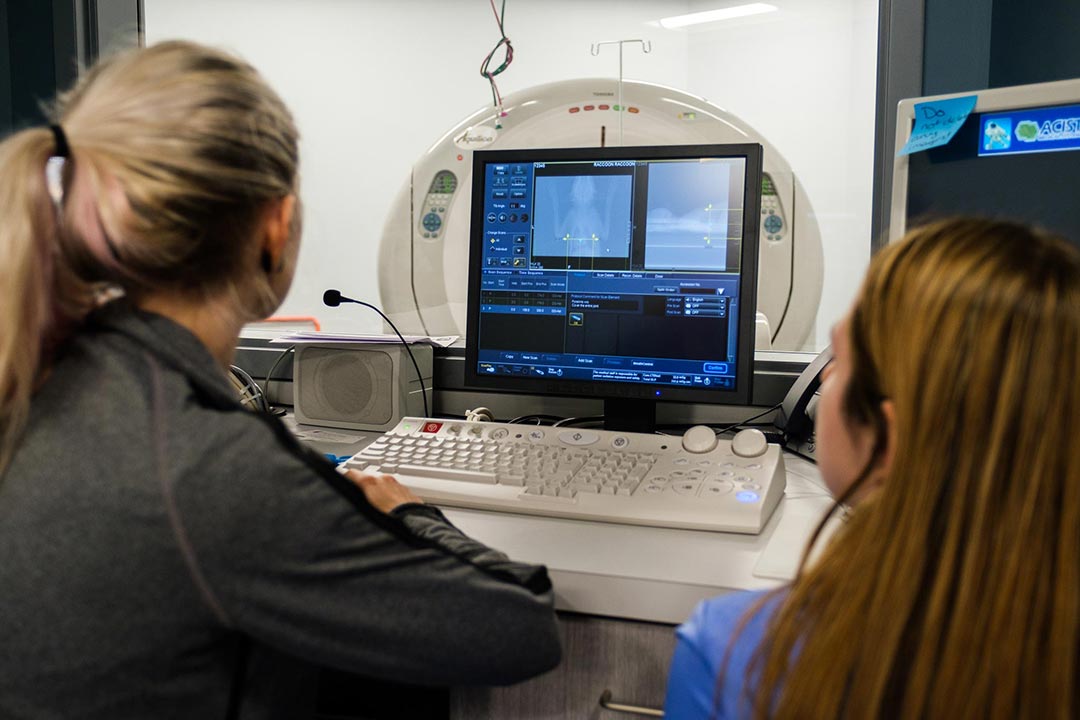
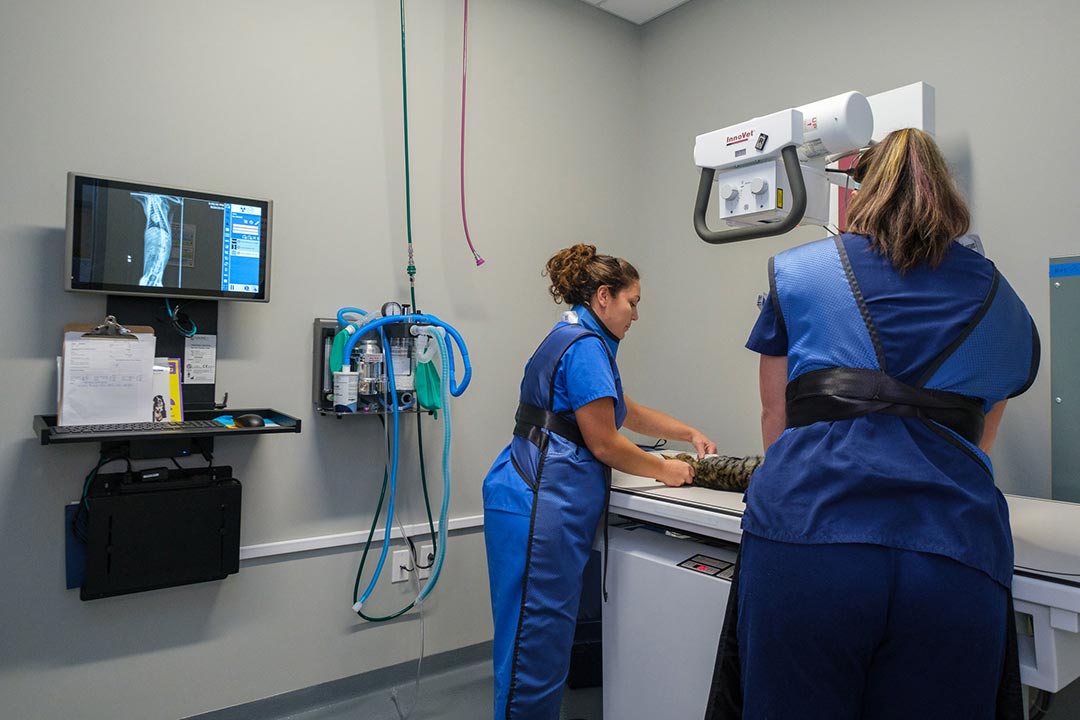
At Veterinary Specialty Care, we offer advanced imaging such as digital radiography and CT Scanning and the most advanced, fastest and safest MRI in South Carolina. We offer services in the full spectrum of neurologic disease. Our advanced imaging capabilities available at the Veterinary Specialty Care facility, in combination with other tests, make it possible for us to closely examine the brain, spinal cord, and peripheral nerve
Among other neurologic conditions our surgeons commonly diagnose and treat are the following:
When other options have failed, surgery can offer a pet owner hope to sustain the pet’s life for several additional months or years.
Despite the many recent advances in cancer therapy surgery is still the most widely utilized and frequently the most effective treatment for cancer. It is often used in conjunction with chemotherapy and / or radiation. We are committed to providing the best possible care for companion animals with cancer. Often surgery provides a cure, or the chance to sustain a pet’s life for several additional months or years.
Some kinds of cancer are curable, and some kinds are treatable. Our surgeons make it a point to acquire as much information as possible regarding the behavior that should be expected of the tumor and the location of tumor cells. Our veterinarians will diagnose the affected tissue area and determine the nature of the surgery that must be performed to best treat your pet. To discover the exact location and to find whether and/ or how a tumor is growing, diagnostic imaging is an essential tool that our surgeons use.
Experience makes a difference and at Veterinary Specialty Care our surgeons are all in their second decade of performing specialty surgery. Neurologic, Orthopedic, Gastrointestinal, Cardio-thoracic, Head and Neck, Skin / Reconstructive, Hepatic, and Urogenital surgery, are the major categories of surgery we perform regularly. We see the unusual cases every day and it is our experience that will provide your pet with a rapid and accurate diagnosis and the best surgical management possible. Being a great surgical service is much more than "bells and whistles". Great equipment is important but only in the hands of someone with the decision making skills to decide if surgery is appropriate and the experience to perform surgery with confidence and precision. Surgery should be appropriate, quick, kind, and clean and the essential ingredient is experience.
To ensure the safety of anesthesia and surgery it is important to rule in or out the presence of other health issues. Prior to surgery every case is thoroughly discussed with the referring veterinarian and is thoroughly examined. Pre-surgical blood tests, X-Rays, ultrasounds, EHG’s, etc are performed as necessary on a case by case basis.
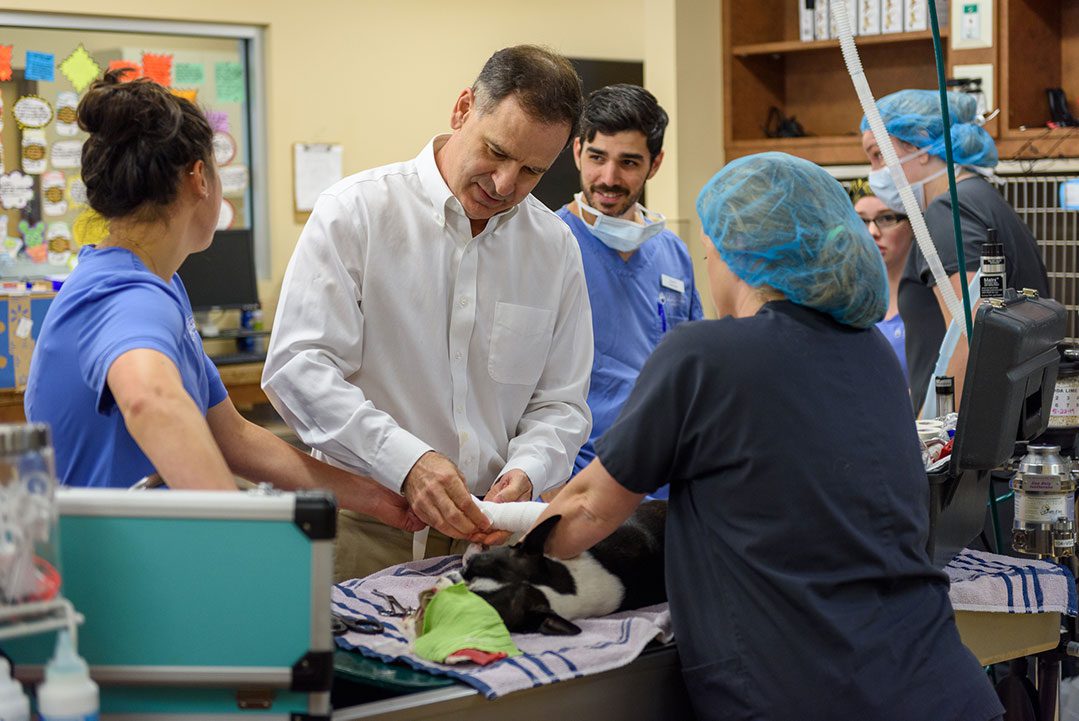
Anesthesia safety is as important as anything happening surgically. That’s why we assign one skilled technician to each case who does nothing other than monitor the patient. Along with skilled and experienced eyes, hands, ears, and minds our anesthetists are aided by state of the art monitoring equipment which records ekg’s, blood oxygen saturation, blood pressure, heart and respiratory rate, and exhaled co2 levels. Everything that would be monitored on you is monitored on your pet. Patients are maintained on 100% oxygen and iv fluids.
Sterility - All surgical procedures are performed under sterile conditions. Surgeons and assistants are capped , masked, gloved and gowned. Patients are surgically prepped and draped in for surgery. Patients are also given perioperative anitbiotics.